
Student Learning Assessment Tools (Complete Guide)
Most schools and parents rely on grades to understand student performance.
Grades often show what happened academically, but they may not fully explain why a student is succeeding or struggling.
This guide explains how modern learning assessment tools help you understand:
- How students actually learn
- Why they struggle or succeed
- What interventions actually work
And how the My Learning Quotient (MLQ) Assessment Tool provides deeper insight than traditional testing.
What Are Student Learning Assessment Tools?
Student learning assessment tools are systems that measure:
- Academic performance
- Learning behaviors
- Motivation and engagement
- Cognitive and metacognitive strategies
Many modern assessment tools go beyond measuring knowledge by also examining learning behaviors, motivation, and study strategies.
Why Traditional Exams Are Not Enough
Grades alone cannot answer:
- Why a student is underperforming
- Whether it’s a motivation or strategy issue
- How a student actually learns best
Limitations of traditional assessment:
- Focus only on outcomes
- No behavioral insight
- No psychological understanding
- One-dimensional scoring
This is where modern tools become essential.
Best Student Assessment Tools for Schools: What Works and Why
Types of Learning Assessment Tools
1. Academic Performance Tools
- Standardized tests
- Quizzes and exams
- Grade-based systems
- Measure: knowledge retention
- Miss: learning behavior
2. Behavioral Assessment Tools
- Study habit trackers
- Engagement logs
- Classroom participation systems
- Measure: behavior patterns
- Miss: motivation depth
3. Psychometric Assessment Tools
- Motivation assessments
- Learning preference assessments
- Cognitive profiling tools
- Measure: why students behave a certain way
- Example: My Learning Quotient (MLQ) Assessment Tool
Why Schools Need Better Assessment Tools
Modern education increasingly combines educator experience with data-informed decision-making.
Benefits for schools:
- Identify struggling students earlier
- Personalize learning interventions
- Improve teaching strategies
- Track learning growth beyond grades
How to Identify Learning Gaps in Students: A Practical Guide for Parents and Educators
Why Parents Need Assessment Tools Too
Parents often rely on:
- Grades
- Teacher feedback
- Observation
But these are incomplete.
What parents actually need:
- Why their child is struggling
- Whether it’s motivation or method
- How to support learning at home
How to Understand Your Child’s Learning Style: A Research-Based Guide for Parents
What Makes a Good Learning Assessment Tool?
A strong tool should measure:
- Motivation (intrinsic vs extrinsic)
- Study strategies
- Time management
- Self-efficacy
- Test anxiety
- Learning behavior patterns
For a more complete understanding of learning, many educators also consider factors such as motivation, study strategies, and self-efficacy.

Introducing the My Learning Quotient (MLQ) Assessment Tool
The My Learning Quotient (My Learning Quotient (MLQ)) Assessment Tool is designed to go beyond grades.
It helps build a broader picture of a student’s learning behaviors, motivation, and study patterns.
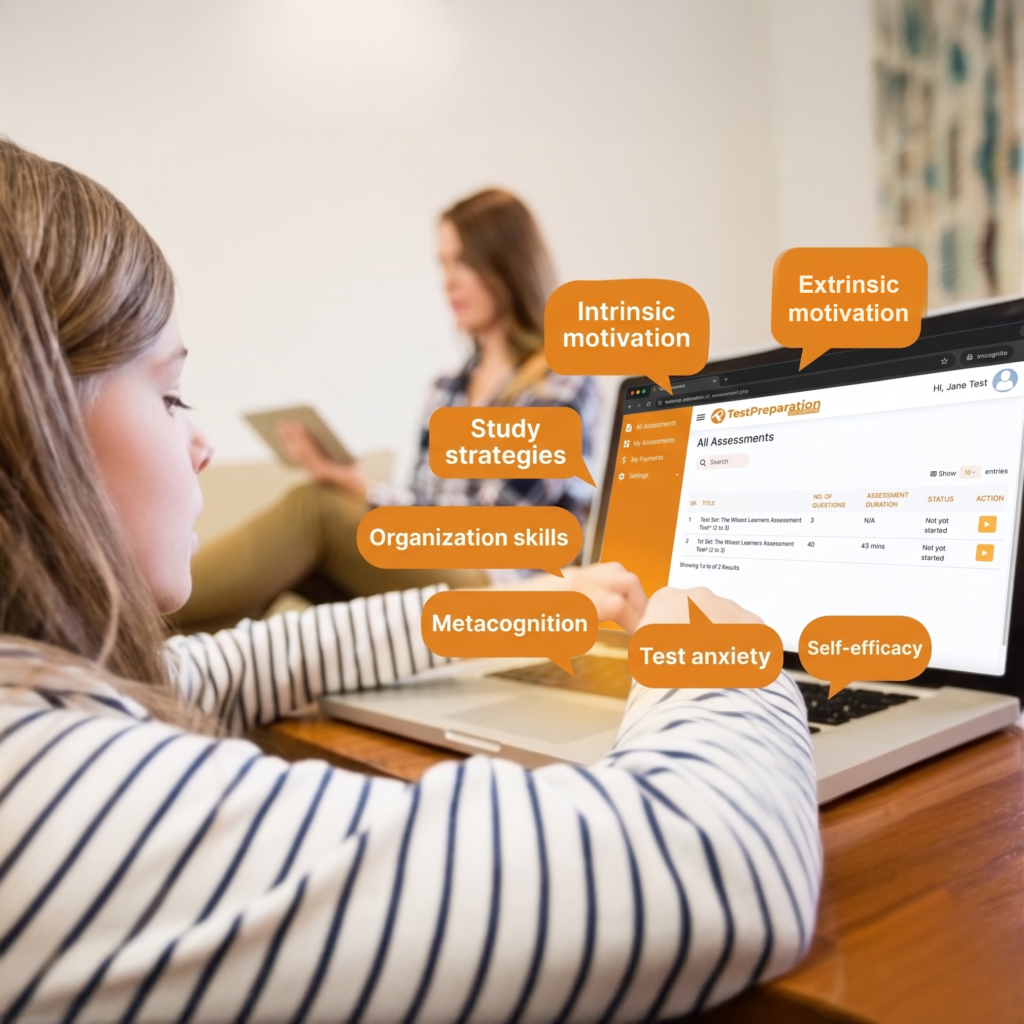
What My Learning Quotient (MLQ) Measures:
- Intrinsic motivation
- Extrinsic motivation
- Study strategies
- Organization skills
- Metacognition
- Test anxiety
- Self-efficacy
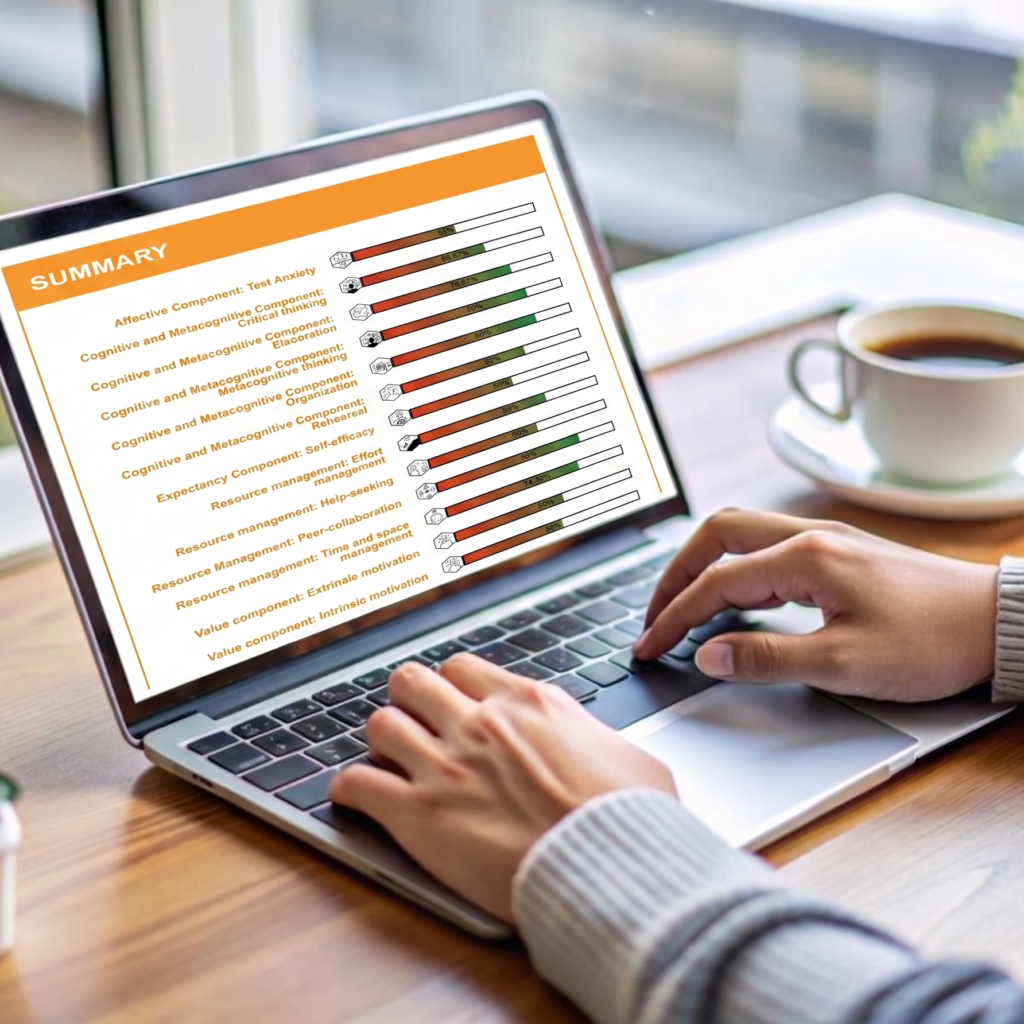
What You Get:
- Personalized learning report
- Actionable improvement insights
- Clear learning profile breakdown
Who It’s For:
- Parents
- Schools
- Homeschool educators
- Academic coaches

Traditional Assessment vs My Learning Quotient (MLQ) Approach
Feature | Traditional Exams | My Learning Quotient (MLQ) Assessment Tool |
Focus | Academic scores | Learning behavior |
Insight | Limited | Broader learning insights |
Personalization | None | High |
Motivation analysis | No | Yes |
Study strategy insights | No | Yes |
Common Problems Schools Face Without Proper Tools
- Students underperform without clear reason
- Teachers rely on guesswork
- Parents lack actionable insights
- Interventions are reactive, not proactive
How to Choose the Right Assessment Tool
Look for tools that:
- Go beyond grades
- Measure motivation and behavior
- Provide actionable reports
- Are backed by research
- Support both schools and parents
Related Learning Resources
Explore deeper topics:
- How student motivation affects performance
- Why students lose interest in school
- How to improve study habits effectively
- Intrinsic vs extrinsic motivation explained
Final Thoughts
The future of education is not just about testing knowledge—it’s about understanding the learner.
Schools and parents who adopt data-driven learning assessment tools will be better equipped to:
- Support struggling students
- Personalize learning
- Improve outcomes sustainably